
Flights of Foundry 2026 Round Up!
Everything I got up to over the weekend!

Ah, Flights of Foundry: my first con love, my forever con love. It always makes me so happy to spend the weekend with FoF, and this year was no different.
And this year, for the first time, if you are a registered ticket owner, you can go back and watch panels you missed for the next 30 days! This includes viewing the chat for the panels to get all those lovely links to expand your TBR. But just in case, I still have a round up post to give you a taste of everything I attended and what I learned over the weekend.
(Events I was on are marked with an asterisk. Descriptions are taken from the program website unless otherwise stated.)
*Mixed Media, Found Fiction, and Experimental Formats
Moderator: Merc Fenn Wolfmoor
Speakers: Kai Delmas, G.T. Korbin, Catherine Tavares (it me!)
Description: What happens when a story stops looking like a story? From collage and ephemera to hybrid text-image works, let's dig into what draws us to experimental formats, how found materials shape narrative, and what these forms can do that straightforward prose can't.
Key Takeaways:
- Mixed media does not equal found footage.
- Mixed media might be all different formats put together in a sort of collection while found footage can be all the same type of media just many iterations of it.
- When writing an experimental format for a novel, at some point the premise of the format is going to be challenged by the plot/characters.
- Establish as a character trait that this person would, for example, write in their diary these events in order to process them.
- A big challenge of experimental formats is the lack of information. There are large gaps in the story by its nature.
- When writing experimental formats, you need beta readers.
Carceral Systems and Justice in SFFH
Speakers: Avery Delany, Mona West
Description: Speculative fiction has long imagined alternatives to prisons, policing, and punishment - and just as often reimagined them at their worst. Let's talk about how SFFH engages with carceral systems and justice, what tropes need retiring, and what stories are pointing toward something better.
Key Takeaways:
- Carceral systems = systems intended to hold people accountable for harms.
- systems of power define what is “right” and “wrong” and often change throughout history.
- The portrayals of these systems in media are not very thoughtful or respectful of the very real people trapped in/affected by these systems.
- Why do we consider the punishment of human beings, regardless of what they have/haven’t done, entertainment? What does that say about us?
- artists cannot just take the lived experiences of real people and use them as “inspiration” for their speculative worlds.
- A “better” example of a prison system gives voice to the people who are in prison and gives them agency and humanity.
- It is easier to think about restorative justice as a possibly when you center people over punishment.
- Justice is not divorced from care and empathy.
- It is easier to think about restorative justice as a possibly when you center people over punishment.
- SFFH posits different economies and governments and education, but seems to always default to the real-world/Earth systems of incarceration.
- Imagination is a tool for liberation.
Franken-Formats (Combining Art, Design, and Writing)
Presenter: Rue Sparks
Description: Let's get out of our bubbles! Take risks, and challenge yourself to use your skills in innovative ways.
Key Takeaways:
- Examples of frank-format genres: metafiction, ergodic fiction, epistolary fiction.
- Taking skills tangential to your creative work and finding ways to integrate them into your storytelling.
- what are some of the emotions attached to those skills? How do those emotions resonate with your stories/characters?
- There are some aspects of story and character that are better told in different mediums.
- Engage with discovering your own interests by checking out your own search history on Google, etc.
- Approach with caution. Things will be revealed about yourself you might not want to know.
- Working in franken-formats is non-linear, very fluid, and all about iteration.
- start big and broad and then go small and detailed.
Monster Narratives: From the F—ed-up to the F—able
Presenter: Lizzie Blackwood
Description: We take a look at the many fascinating roles monsters have served in storytelling to reflect on ourselves, our psychology, and the world around us.
Key Takeaways:
- Monster = unnatural, supernatural, or otherworldly being.
- often manifestations of human fears and anxieties.
- a metaphorical vehicle to ask big existential questions or explore ideologies and concepts of humanity.
- often manifestations of human fears and anxieties.
- Stereotypes/offensive descriptions are a huge risk within monster narratives.
- many monsters exist in cultural/historical contexts that, taken out of those, become appropriative.
- When monsters are the protagonist they can look/be the same as the antagonist but their function within the narrative changes to become more protective/restorative.
- sometimes will have a tragic/sympathetic backstory/involuntarily made monstrous
- Superheroes can fit this role.
- This is usually where the romantic/erotic option comes into play.
- there are dealbreakers here that are different for every person.
- a lot of different explorations on desire, sex, romance, etc. available in these stories.
- sometimes will have a tragic/sympathetic backstory/involuntarily made monstrous
- Can be challenging to use monsters because you might accidentally be excusing really bad behavior/things, particularly when the monster is cast as the protagonist.
- Monsters in sci-fi—what differentiates an alien from a monster?
- how do we maintain the personhood of non-human characters?
Keynote Interview with Nghi Vo
Moderator: Rosemary Jones
Speakers: Nghi Vo
Description: An interview with Guest of Honor Nghi Vo!
Key Takeaways:
- The publication order of your work is not necessarily the order it was written in.
- Siren Queen was written before The Chosen and the Beautiful but they were published in the opposite order.
- A Mouthful of Dust was written early on but is the sixth in the Singing Hills Cycle.
- “[Nghi] believes in the ritual of lipstick, the power of stories, and the right to change your mind.”
- “it is not a victory to be unchanging and right all the time”
- this is simply not possible for humanity.
- “it is not a victory to be unchanging and right all the time”
- Gothic = where the gore is pretty!
- Start doing research once it is time to get the story onto paper, but the research will continue throughout as you come up against questions about details as you write the story.
- the research never stops!
- people are reading close and watching close and will fact check you.
- Making a character: who/what made them this way? what are their goals in each specific scene?
Chill-n-Chat with Jennifer Hudak
Host: Jennifer Hudak
Description: Hanging out with author extraordinaire, Jennifer Hudak! (description from me)
Key Takeaways:
- Jennifer Hudak is an amazing person and writer and everyone should be reading her stories and poems.
- The Witch Trap was rejected multiple times before finding a home. Never give up on your stories.
- If you love your work, then it will find its readers someday.
- Poetry is an opportunity to play with words and language.
- as spec poetry becomes more recognized, there will be more information/education about the critique of it.
- Nico Martinez Nocito’s Stardust & Verse patreon is helping with this.
- as spec poetry becomes more recognized, there will be more information/education about the critique of it.
- JENNIFER HUDAK IS AN AMAZING PERSON AND WRITER AND EVERYONE SHOULD BE READING HER STORIES AND POEMS!
*Disability Rep in SFFH: Going Beyond Token Characters
Moderator: Catherine Tavares (it me!)
Speakers: V.M. Ayala, Raven Oak
Description: What it looks like to have honest, respectful, and meaningful representation for disabled characters and how the presence of disabled characters positively impacts both the story and the reader.
(description written by me)
Key Takeaways:
- SENSITIVITY READERS!!!
- even when you are writing your own disability.
- The idea of eradicating all disabilities, especially without the consent of the disabled, is eugenics.
- disabled people, and only disabled people, should have the choice when it comes to “cures.”
- When disabled characters are part of the narrative as fully present, dynamic characters, then there is less a chance of tokenism.
- Publishing is still quite ableist and there will be pushback on disabled characters in greater numbers, representing invisible/dynamic disabilities, or portraying darker stories.
- “inspiration porn” = the idea that disabled characters have to have happy, morally pure stories and endings.
- this is an ableist notion that is there for the ignorant comfort of abled people.
- “inspiration porn” = the idea that disabled characters have to have happy, morally pure stories and endings.
- In the gaming community, some people view accessibility options as “cheats” but such options are actually 1) needed to give disabled players access, and 2) beneficial for everyone to be able to create the gaming challenge perfect for them.
- With art, the visual medium can sometimes drive home a concept by giving people an illustration of it in action.
- Accessibility always helps everyone.
The Genre is What Now? Little Known Subgenres
Moderator: Chelsea Sutton
Speakers: E.M. Linden, Marianna Martin, Samantha Mills, Sid Jain
Description: SFF is full of sub-genres that never quite break into the mainstream. Not everything is Something-punk! Let's shine a light on some lesser-known corners of the genre, what defines them, and why they deserve more attention.
Key Takeaways:
- Gothic whimsy. Lo-fi cyberpunk. TELL ME MORE!
- Genre as a verb, not a noun.
- it’s a process with a lot of moving parts.
- a contract between author and reader for expectations, promises, etc.
- Commercial genre terms are often birthed from and used by marketing teams that have really nothing to do with the story, the author, the reader, etc.
- Capitalism, everybody!
- Need to decide who you are laying this story out for and what genre conventions/common knowledge you are going to be pulling from.
- knowing what you are getting into—genre can bring comfort to a reader in that respect.
- Genre is in flux and in conversation with everything. What was considered X genre in the past might not be now.
- Genre = tools, not rules.
- each genre comes with a set of tools. Pick whichever ones across the board fit the need of your story/characters.
- there’s no wrong answer; there’s just what works for your story and what doesn’t.
- each genre comes with a set of tools. Pick whichever ones across the board fit the need of your story/characters.
- As an author, if you have an anchor genre that is always a part of your work, then it gives you permission to dabble in mashing other genres into that anchor.
- an author brand (sob!) to ground the marketing team and reader expectations.
Kiss First, Save the World Later: Balancing Romance and Plot
Moderator: Sydnee Thompson
Speakers: Adi Denner, GT Korbin, A.Z. Louise/Alby C. Williams, Valerie Valdes
Description: A discussion on balancing romance and plot, making both feel equally satisfying, and whether saving the world is still enough without a love story.
Key Takeaways:
- Vibes can sustain a romance in a way that they cannot for plot, character, etc.
- A second plot (A or B) alongside the romance gives the characters lives and depth outside of each other so they can come together as individuals.
- it can also seed in some doubt and increase the tension about whether or not they will get together.
- external problems threaten the relationship as opposed to internal problems.
- Ask yourself: what is wrong with these two people?
- character histories and hangups come into play to cause problems.
- Who are they in the beginning and who are they at the end and how did they influence that change in each other?
- it can also seed in some doubt and increase the tension about whether or not they will get together.
- The romantic choices being made should also move the plot forward. Everything should intertwine.
- Scene/Sequel structure
- quiet conversations and the subtext, reactions to things, processing in the aftermath, etc.
- revelations, secrets, tests of trust, etc. will all build up that romantic tension.
- quiet conversations and the subtext, reactions to things, processing in the aftermath, etc.
*Disability Futurisms
Moderator: Risa Wolf
Speakers: Rue Sparks, Raven Oak, V. Astor Solomon, Catherine Tavares (it me!)
Description: When disabled people envision a future that includes them, it embraces more than just a single individual’s needs. In this panel, disabled writers discuss viewpoints that challenge traditional SFF perspectives.
(description from Risa Wolf)
Key Takeaways:
- Accessibility is good for everyone—a future where everyone’s needs are met, no matter what, is an excellent future to work toward.
- We need to move from equality to equity.
- Writing (and reading) leads to empathy, makes you ask questions and reflect, and this leads to better, more creative futures.
- Disabled people have always been here; we will always be here.
- There is no future without us, so there needs to be a future that includes us.
- Disabled DIY: disabled folks are excellent at finding solutions under high stakes/high pressure circumstances.
- We live in a world not made for us, hostile to us, and so we are natural survivors.
- This makes us uniquely capable of filling more adventurous, heroic roles, not just in fiction but in life.
- We live in a world not made for us, hostile to us, and so we are natural survivors.
- “My wheelchair is my throne.” —Alice Wong.
*Resident Evil Fan Meetup
Moderator: Catherine Tavares (it me!)
Description: Videogames. Movies. Books. Raccoon city has a zombie problem in many formats, and this is the place for fans of all of them. Come hang out with fellow fans and bring a a spare box of bullets.
Key Takeaways:
- Resident Evil is awesome, has always been awesome, and we have excellent reason to believe it will continue to be awesome.
- TIL: Resident Evil Village is peak setting accuracy! Thank you for the insight, Nadia!
- Classic Resident Evil has been formative not just for players, but for the gaming industry as a whole.
- There is no survival horror without Resident Evil!
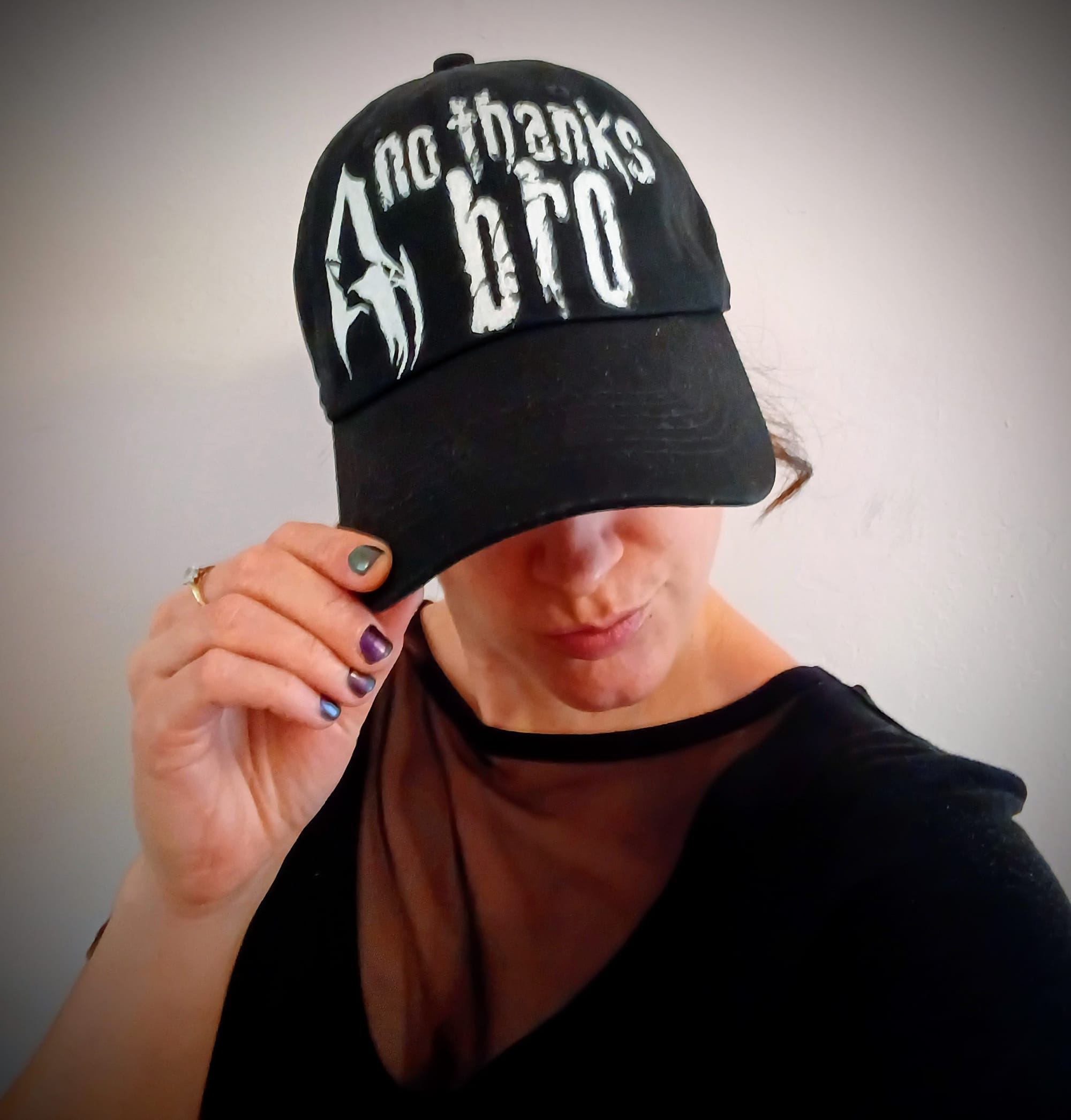
My super awesome RE4 (2005) hat with my favorite Leon Kennedy/Paul Mercier delivered line on the front!
Whew! And that’s it! Remember: if you are registered, the recordings of the panels are available for the next 30 days, and I am told the Dream Foundry Discord is organizing some watch parties, so the con goes on! Be sure to check it out.
Also, Flights of Foundry is part of Dream Foundry and they have programming year round and do so much excellent work for the writing community. If you are able, please consider donating to them so they can continue to bring us awesome cons and content.
Massive thanks to the folks over at Dream Foundry/Flights of Foundry, the volunteers, moderators, panelists, artists, and audience members who make this con as amazing as it is. FoF was my very first SFFH convention, and now it is a permanent part of my year. It’s done wonders for me as a person, and it does wonders for the community as a whole. Thank you!
“The (Mis)Fortunes of Saint Ilia’s School for Gifted Girls, In No Particular Order” Paper Fortune Teller Version! (Subscriber Exclusive)
Hello lovely subscribers! Thank you so much for being a part of my newsletter. I am delighted to have you here, and I hope you enjoy the news/content. To say thank you and celebrate the wonderful weekend at Flights of Foundry, I have included as a subscriber exclusive the paper fortune teller version of my story “The (Mis)Fortunes of Saint Ilia’s School for Gifted Girls, In No Particular Order” available as a PDF download below.
Thank you again, and happy reading (and playing)!